
Key Takeaways
- AI-powered automotive CRM helps dealerships manage their entire sales process from one platform. It organizes leads, tracks sales pipelines, and improves customer relationship management with smarter automation.
- CRM systems improve customer communication through personalized and real-time interactions. Dealerships can use centralized customer data to deliver better experiences across every touchpoint.
- AI insights help dealerships make data-driven decisions and increase conversion rates. Sales teams can identify opportunities, automate marketing, and improve customer engagement.
What Is an Automotive CRM?
An automotive CRM is software designed for dealerships to manage customer data, sales activities, vehicle history, and service interactions. It helps teams improve communication and build stronger customer relationships.
How Automotive CRM Works
An automotive CRM captures leads, stores customer information, tracks interactions, and automates follow-ups. It helps dealerships use real-time data and analytics to improve sales decisions.
Why Do Car Dealerships Need an Automotive CRM?
A CRM for your dealership helps solve common challenges like missed leads, scattered customer information, poor follow-ups, and unclear sales pipeline tracking. It enables dealerships to manage customer interactions better and improve sales efficiency.
Improves Lead Management
Automotive CRM improves lead management by capturing and organizing leads automatically. It helps sales teams prioritize valuable prospects, respond faster, and reduce missed sales opportunities.
Creates Better Customer Experiences
An automotive CRM improves customer experience by providing personalized recommendations, faster responses, and consistent communication. This helps dealerships build stronger relationships and increase customer loyalty.
How AI-Powered Automotive CRM Transforms Dealership Operations
An AI-powered automotive CRM helps dealerships automate tasks, analyze customer data, and improve sales processes. It enables smarter decisions through AI insights, faster responses, and personalized customer interactions.
AI-Based Lead Scoring and Qualification
AI analyzes customer behavior to identify high-intent buyers and predict conversion chances. It helps sales teams focus on valuable leads and improve sales efficiency.
Automated Customer Communication
Automotive CRM automates customer communication through emails, SMS, reminders, and AI chat assistants. It delivers personalized messages based on customer actions and preferences.
Predictive Sales Analytics
AI-powered CRM uses data-driven insights to forecast sales trends, identify buying patterns, and help dealerships create better sales strategies using real-time information.
Smart Marketing Automation
Marketing automation helps dealerships create targeted campaigns, send follow-ups after inquiries or test drives, and reconnect with previous customers to increase engagement.

Key Features of an Automotive CRM System
An automotive CRM system provides dealerships with tools to manage customers, sales, communication, and operations.
Centralized Customer Data Management
Centralized customer data creates a single customer profile with purchase history, preferences, and interactions. It helps sales and service teams access accurate information while reducing duplicate records.
Sales Pipeline Management
Sales pipeline management helps dealerships track leads from inquiry to purchase and monitor each sales stage. It improves sales team productivity by providing better visibility into opportunities.
Real-Time Data Synchronization
Real-time data synchronization keeps customer information updated across sales, marketing, and service departments. It improves collaboration and ensures teams always have accurate data.
Dealer Management System (DMS) Integration
Dealer management system DMS integration connects CRM with inventory, finance, and service systems. It creates a connected dealership ecosystem and improves operational efficiency.
AI Chatbots and Virtual Assistants
AI chatbots and virtual assistants provide instant customer support, answer questions, schedule appointments, and help sales representatives manage customer interactions more effectively.
Benefits of AI-Powered Automotive CRM for Dealerships
An AI-powered automotive CRM enables dealerships to improve sales performance, automate daily tasks, and deliver better customer experiences.
Increases Conversion Rates
AI-powered CRM improves conversion rates by responding to leads faster, automating follow-ups, and creating personalized customer journeys that encourage more sales.
Helps Sales Teams Sell Smarter
An automotive CRM helps the sales team with AI recommendations, automated task management, and better visibility into customer behavior. This allows representatives to focus on the best sales opportunities.
Improves Customer Engagement
Better customer engagement comes from personalized communication and consistent interactions across email, phone, SMS, and other channels. This helps build stronger customer relationships.
Reduces Manual Sales Tasks
Automation reduces repetitive work by handling reminders, follow-ups, and data entry. This improves employee productivity and allows teams to spend more time selling.
Builds Long-Term Customer Relationships
Automotive CRM strengthens customer loyalty through maintenance reminders, targeted loyalty campaigns, and personalized offers that encourage repeat purchases.
Real-World Use Cases of Automotive CRM
Automotive CRM helps dealerships streamline sales, marketing, and customer service with automation and real-time insights. It supports every stage of the customer journey, from the first inquiry to long-term retention.
Lead Capture and Follow-Up Automation
Automotive CRM captures leads from websites, online ads, and social media, then automatically assigns them to sales representatives. It also sends timely follow-ups to improve response rates.
Vehicle Sales Management
The CRM tracks customer preferences, manages negotiations, and monitors sales progress. This helps sales teams provide personalized service and close deals more efficiently.
Test Drive Scheduling
Automotive CRM simplifies test drive scheduling with automated appointment booking and reminders for both customers and sales teams.
Customer Service and Maintenance Follow-Ups
The system sends service reminders, stores customer history, and tracks maintenance records. These features improve customer retention and encourage repeat visits.
Marketing Campaign Personalization
Automotive CRM uses customer segmentation to deliver targeted promotions and automated marketing campaigns. This helps dealerships reach the right customers with relevant offers.
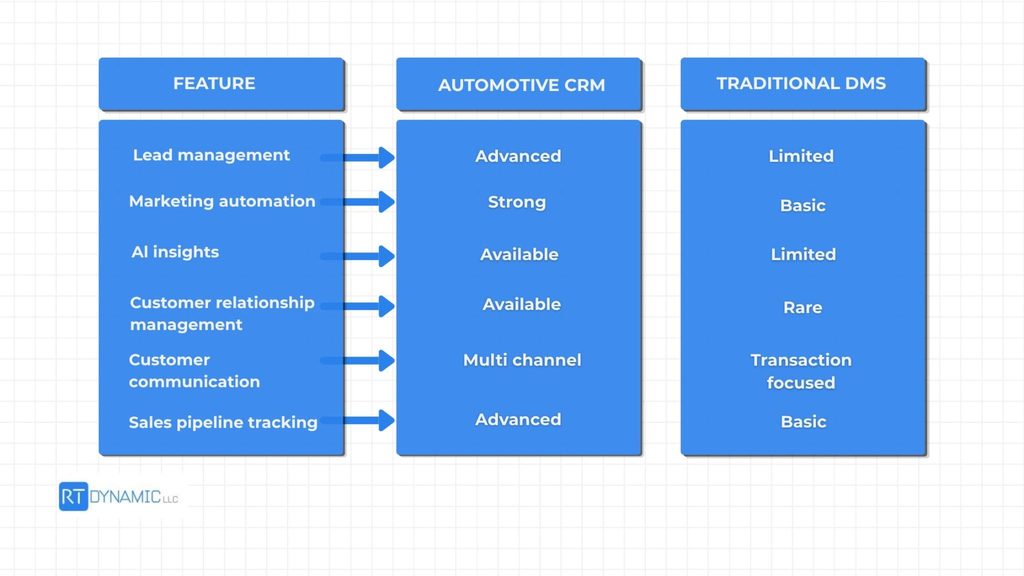
Automotive CRM vs Traditional Dealer Management System (DMS)
A dealer management system (DMS) manages dealership operations such as inventory, finance, and service, while an automotive CRM focuses on customer relationships, sales, and marketing.
How to Choose the Right Automotive CRM for Your Dealership
Choosing the right automotive CRM depends on your dealership's size, goals, and daily operations. Look for a solution that improves sales, supports automation, and integrates with your existing systems.
Industry-Specific Features
Choose a CRM built for automotive businesses with dealership workflows, vehicle inventory support, and customer journey tracking. These features help streamline daily operations.
AI and Automation Capabilities
Look for AI features like predictive analytics, automated communication, and smart recommendations. These tools help sales teams work faster and make better decisions.
Integration Options
Select a CRM that integrates with your DMS, marketing tools, website, and communication platforms. Seamless integration keeps customer data connected across systems.
Scalability and Security
Choose a CRM that can grow with your dealership while protecting customer data. Strong security features and user permissions help ensure safe and reliable access.
Steps to Implement an Automotive CRM Successfully
A successful automotive CRM implementation requires careful planning, clean data, and team adoption. Following the right steps helps dealerships achieve better results and maximize CRM value.
Analyze Your Current Sales Process
Review your sales process to identify gaps, bottlenecks, and missed opportunities. Set clear dealership goals before implementing the CRM.
Clean and Organize Customer Data
Remove duplicate records and update outdated information before migration. Clean customer data improves CRM accuracy and performance.
Train Sales and Service Teams
Provide training on CRM workflows and daily tasks. Encouraging adoption helps sales and service teams use the system effectively.
Monitor Performance Metrics
Track key metrics such as lead conversion rates, customer engagement, sales performance, and response times. Regular monitoring helps optimize CRM performance and improve results.
Common Mistakes to Avoid When Implementing Automotive CRM
Avoiding common implementation mistakes helps dealerships get the most value from their automotive CRM.
Choosing a Generic CRM Without Automotive Features
A generic CRM may lack dealership-specific tools like vehicle inventory tracking, lead management, and service workflows. Choose a solution designed for automotive businesses.
Ignoring Data Quality
Poor-quality or duplicate customer data reduces CRM accuracy and affects sales and marketing performance. Clean your data before implementation.
Not Training Employees Properly
Without proper training, employees may struggle to use the CRM effectively. Regular training improves adoption and productivity.
Failing to Integrate CRM With Existing Systems
A CRM should connect with your DMS, website, and marketing tools. Poor integration creates data silos and reduces operational efficiency.
Not Using AI and Automation Features
Ignoring AI and automation limits the CRM's potential. Using these features helps automate tasks, improve customer engagement, and increase sales efficiency.

Future Trends of AI in Automotive CRM
The future of AI-powered CRM will focus on smarter automation, predictive insights, and personalized customer experiences.
AI-Powered Sales Assistants
AI-powered sales assistants provide automated recommendations and real-time guidance to help sales teams respond faster and close more deals.
Predictive Customer Behavior Analysis
AI analyzes customer behavior to understand buying intent and improve targeting. This helps dealerships deliver more relevant offers and marketing campaigns.
Connected Customer Experiences
Future CRM systems will support omnichannel communication and personalized customer journeys. Customers will enjoy seamless interactions across every touchpoint.
Advanced Automation Across Dealership Operations
AI will automate more dealership workflows, reduce manual tasks, and improve operational efficiency. This allows teams to focus on delivering better customer service.
Conclusion
An AI-powered automotive CRM helps dealerships improve customer relationships, automate sales processes, and deliver better customer experiences. AI, automation, and real-time data enable smarter decisions and higher sales performance.
RT Dynamics offers expert CRM implementation, customization, and integration services to help dealerships choose and optimize the right automotive CRM solution for long-term growth.
Frequently Asked Questions
What is an automotive CRM?
An automotive CRM is software designed for dealerships to manage customer data, leads, sales activities, and communication from a single platform.
How does AI improve automotive CRM?
AI-powered CRM analyzes customer data, predicts buying behavior, automates routine tasks, and helps sales teams close deals more efficiently.
What are the benefits of CRM for car dealerships?
A CRM for your dealership improves lead management, customer engagement, sales tracking, marketing automation, and conversion rates.
Can automotive CRM integrate with a DMS?
Yes. An automotive CRM can integrate with a dealer management system (DMS) to connect customer records, inventory, finance, and service operations.
How does CRM improve dealership sales?
CRM improves dealership sales by organizing leads, tracking the sales pipeline, automating follow-ups, and providing valuable customer insights.
Is AI-powered CRM suitable for small dealerships?
Yes. AI-powered CRM helps small dealerships automate daily tasks, improve customer communication, and increase sales without adding extra workload.