
Key Takeaways
- Real estate CRM solutions centralize leads, properties, and client data. They improve follow-ups and increase sales opportunities.
- The right real estate CRM software automates routine tasks. It helps agents work faster and serve clients better.
- Successful CRM implementation real estate boosts productivity and supports business growth. It also keeps teams organized and connected.
What Are Real Estate CRM Solutions?
Real estate CRM solutions are specialized systems that help agents, brokers, and property managers manage leads, clients, and property listings. They organize data, automate follow-ups, and simplify daily workflows.
How a CRM differs from general sales software
Unlike general sales software, real estate CRM software is designed for property businesses. It supports listing management, MLS integration, buyer tracking, and real estate-specific workflows.
Who should use a real estate CRM?
A real estate CRM is ideal for real estate agents, brokers, property managers, and agencies. It helps them manage client relationships, improve communication, and close deals more efficiently.
Why Real Estate Businesses Need CRM Software
As leads, buyers, and property listings grow, manual tracking becomes difficult. Real estate CRM software centralizes client data, automates follow-ups, and helps agents respond quickly. This improves customer relationships and prevents missed opportunities.
A CRM also tracks every stage of the sales pipeline and organizes communication history. With better lead management, team collaboration, and workflow automation, businesses increase conversion rates and support long-term growth.
Key Features Every Real Estate CRM Software Should Have
Lead capture from websites and portals
The best real estate CRM software captures leads from websites, property portals, social media, and campaigns automatically. This ensures every opportunity enters the sales pipeline without manual entry.
Contact and client management
A CRM stores contact details, communication history, and client preferences in one place. Agents can deliver personalized service throughout the customer journey.
Property listing management
Property listings should be organized in a centralized database with images, brochures, and details. Smart matching connects buyers with suitable properties faster.
Automated follow-ups and reminders
Automation schedules follow-ups, reminders, and lead assignments automatically. This improves response times and reduces missed opportunities.
Email, SMS, and WhatsApp integration
Built-in communication tools connect email, SMS, and WhatsApp in one platform. Every conversation stays recorded for consistent client communication.
Document management
A CRM should securely store contracts, property documents, and other files. Quick access improves collaboration and speeds up transactions.
Reporting and analytics
Real-time dashboards track lead performance, conversion rates, and sales progress. These insights help managers make smarter business decisions.
Mobile CRM access
Cloud-based mobile access lets agents update leads and property information anywhere. Teams stay connected whether they are in the office or on-site.
How Property Management CRM Systems Improve Daily Operations
Property management CRM systems centralize property inventory, lease tracking, tenant communication, and property availability. This helps agents manage daily tasks more efficiently.
They also streamline maintenance requests and improve team collaboration. Faster updates and organized workflows lead to better customer service and smoother operations.

Step-by-Step CRM Implementation for Real Estate Companies
Define business goals
Start by setting clear business goals and identifying the results you expect. These objectives guide your CRM implementation real estate strategy.
Audit existing customer and property data
Review your existing database before migration. Remove duplicate records, update outdated information, and organize customer and property data.
Choose the right CRM platform
Select a real estate CRM that matches your workflows and growth plans. Prioritize customization, automation, and integration capabilities.
Migrate data securely
Transfer customer, property, and transaction data carefully. Secure migration protects data quality and reduces implementation risks.
Customize workflows
Configure lead stages, custom fields, and automation rules. Tailored workflows improve productivity and daily operations.
Integrate marketing and listing platforms
Connect your CRM with email, calendars, MLS, and marketing platforms. These integrations eliminate duplicate work and keep data synchronized.
Train agents and staff
Provide practical training before launch. Well-trained teams adopt the CRM faster and use its features effectively.
Measure adoption and optimize
Track system usage, gather feedback, and improve workflows regularly. Continuous optimization increases adoption and long-term business value.
How CRM for Real Estate Agencies Manages Leads More Effectively
Automatic lead assignment
A CRM automatically assigns new leads to the right agent. This speeds up responses and reduces missed opportunities.
Lead scoring
Lead scoring ranks prospects based on interest and engagement. Agents can focus on high-potential buyers first.
Pipeline management
A visual pipeline tracks every lead through the sales process. Teams always know the next action to take.
Appointment scheduling
Built-in scheduling tools organize meetings, calls, and property visits. Automated reminders help reduce missed appointments.
Viewing management
Agents can schedule and manage property viewings efficiently. This creates a smoother experience for buyers and sellers.
Client communication history
Every email, call, and message stays in one place. Complete communication history supports personalized client interactions.
Conversion tracking
Conversion tracking measures how leads move through the sales funnel. These insights help improve sales performance and decision-making.
How Real Estate Automation CRM Saves Time
Automated lead nurturing
A real estate automation CRM sends personalized emails and reminders automatically. This keeps leads engaged without constant manual follow-ups.
Property alerts
The CRM instantly notifies buyers about matching properties and market updates. Timely alerts improve engagement and increase response rates.
Follow-up sequences
Automated follow-up sequences maintain consistent communication throughout the buying journey. No lead is forgotten or overlooked.
Task automation
Routine tasks like scheduling, reminders, and data entry run automatically. Agents save time and focus on closing deals.
Marketing automation
Marketing campaigns can be triggered based on client behavior and preferences. This improves lead nurturing while reducing manual effort.
AI-powered recommendations
AI analyzes customer data and property preferences to suggest suitable listings. These insights help agents make faster, smarter decisions.
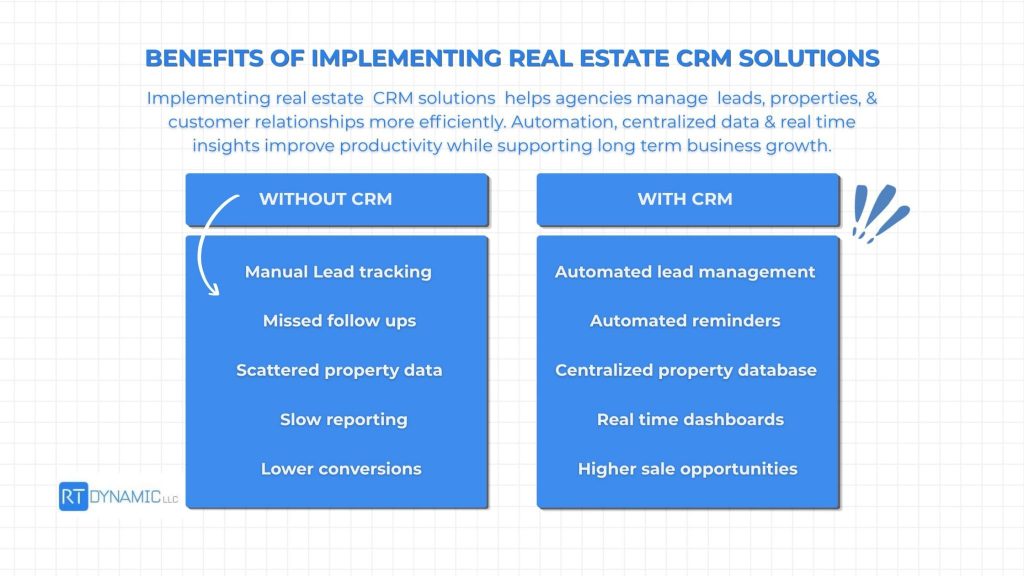
Benefits of Implementing Real Estate CRM Solutions
Implementing real estate CRM solutions helps agencies manage leads, properties, and customer relationships more efficiently.
Choosing the Best Real Estate CRM Software
Ease of use
Choose a CRM with a simple interface and easy navigation. Agents should learn and use it with minimal training.
Customization
Look for software that supports custom fields, workflows, and pipelines. This helps the CRM match your business processes.
Integrations
Your CRM should connect with email, calendars, MLS platforms, and marketing tools. Seamless integrations improve efficiency and reduce manual work.
Mobile app
A mobile app lets agents access client and property information anywhere. This improves productivity during property visits and meetings.
Automation
Automation handles lead assignments, follow-ups, reminders, and repetitive tasks. It saves time and improves response speed.
Scalability
Choose software that grows with your business. A scalable CRM supports larger teams and increasing transaction volumes.
Pricing
Compare subscription fees, implementation costs, and additional charges. Focus on long-term value instead of the lowest price.
Customer support
Reliable customer support helps resolve issues quickly. Training resources also improve CRM adoption across the team.
Security
Select a CRM with strong security and data protection features. Secure customer information builds trust and supports compliance.
Common Challenges During CRM Implementation in Real Estate
Poor user adoption
Employees may resist unfamiliar workflows and avoid using the CRM. Practical training, ongoing support, and clear communication improve adoption.
Data migration issues
Outdated or incomplete records can cause migration errors. Clean and verify customer and property data before moving it.
Duplicate records
Duplicate contacts reduce data quality and affect reporting. Regular database cleanup keeps records accurate and organized.
Lack of employee training
Teams struggle when they are not trained properly. Hands-on sessions help users gain confidence before deployment.
Integration complexity
Integrating the CRM with existing systems can be difficult. Native integrations simplify setup and reduce technical issues.
Budget concerns
Implementation includes more than software costs. Budget for customization, training, integrations, and ongoing support.
Resistance to change
Some employees prefer existing processes over new technology. Early involvement and visible benefits encourage successful adoption.
Best Practices for Successful CRM Adoption
Keep customer data clean
Update customer records regularly and remove duplicate entries. Clean data improves reporting and decision-making.
Standardize sales processes
Use consistent workflows for lead management and follow-ups. Standard processes improve team efficiency and customer experiences.
Automate repetitive tasks
Automate reminders, lead assignments, and routine communications. This saves time and reduces manual errors.
Monitor CRM performance
Track CRM usage, conversion rates, and team productivity regularly. Performance insights help identify areas for improvement.
Continuously train users
Provide ongoing training as new features and workflows are introduced. Well-trained teams achieve better CRM adoption and long-term success.

Why Partner with a CRM Implementation Expert?
A CRM implementation expert helps you deploy the right solution faster while reducing risks. They provide CRM customization, secure data migration, third-party integrations, and user training to ensure smooth adoption.
RT Dynamics helps real estate companies implement and customize CRM solutions that improve lead management and automate workflows. Our experts also provide ongoing optimization, helping your CRM scale with your business and deliver long-term value.
Conclusion
Real estate CRM solutions help businesses manage leads, properties, and customer relationships more efficiently. Automation and centralized data improve productivity, customer service, and business growth.
RT Dynamics provides CRM implementation, customization, integrations, and ongoing support for real estate companies. Our experts help you build a scalable CRM that grows with your business.
Frequently Asked Questions
What are real estate CRM solutions?
Real estate CRM solutions help agencies manage leads, properties, and client relationships. They also automate daily tasks and improve sales efficiency.
What is the best real estate CRM software?
The best real estate CRM software offers lead management, automation, property listings, reporting, and easy integrations. The right choice depends on your business needs.
How does CRM for real estate agencies help?
CRM for real estate agencies improves lead tracking, automates follow-ups, and organizes client communication. This increases productivity and conversion rates.
What is a property management CRM system?
Property management CRM systems help manage properties, tenants, leases, maintenance requests, and property availability from one platform.
How long does CRM implementation real estate take for a company?
Most CRM implementation real estate projects take a few weeks to a few months. The timeline depends on data migration, customization, and training.
What tasks can a real estate automation CRM automate?
A real estate automation CRM automates lead nurturing, follow-ups, reminders, marketing campaigns, and appointment scheduling. This saves time and improves efficiency.